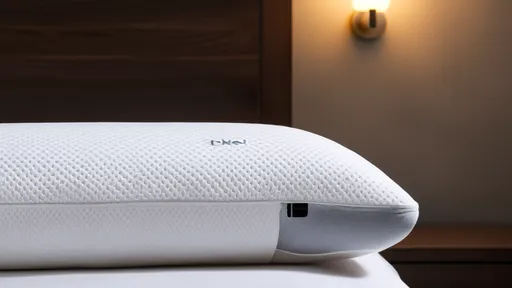
In recent years, the market for sleep technology has exploded, with products ranging from white noise machines to high-tech mattresses promising the elusive perfect night’s rest. Among these innovations, "smart pillows" have emerged as a particularly intriguing option, claiming to combat insomnia through advanced features like sleep tracking, gentle vibrations, and even built-in speakers for soothing sounds. But do they live up to the hype? For many consumers, the answer is a resounding no—especially after shelling out thousands of dollars for what amounts to little more than a glorified cushion.
One such disappointed buyer is Lisa Thompson, a 34-year-old marketing executive from Seattle who struggled with chronic insomnia for years. "I saw ads for this smart pillow everywhere—social media, podcasts, even YouTube," she recalls. "It claimed to use biometric sensors to adjust to your sleep patterns and even had ‘scientifically proven’ sound frequencies to lull you into deep sleep. I thought, ‘Finally, a solution!’" After spending nearly $2,000 on the device, however, Lisa found herself staring at the ceiling just as often as before. "The pillow was comfortable, sure, but it didn’t do anything my regular pillow couldn’t. If anything, the constant humming from the built-in speakers kept me awake."
Lisa’s experience is far from unique. Online forums and product review sections are filled with similar complaints from frustrated customers who feel duped by bold marketing claims. Many report that the pillows—often priced between $500 and $2,500—fail to deliver on their promises, leaving users no better rested than they were before. Some even argue that the devices introduce new problems, such as discomfort from embedded electronics or distractions from unnecessary features. "It’s like they took a regular pillow and added a bunch of gadgets just for the sake of calling it ‘smart,’" grumbles another buyer, Mark Reynolds. "I’d have been better off buying a $50 memory foam pillow and saving the rest for a vacation."
So why do these products continue to sell—and at such premium prices? Industry experts point to the powerful combination of sleep deprivation and clever advertising. "Insomnia is a desperate condition," explains Dr. Evelyn Carter, a sleep specialist based in Boston. "When people are exhausted and willing to try anything, they’re vulnerable to exaggerated claims. Companies know this and capitalize on it by using terms like ‘AI-powered’ or ‘clinically tested,’ even if the evidence is flimsy." Indeed, many smart pillow manufacturers rely on vague, buzzword-heavy language to imply scientific legitimacy without providing concrete data. One popular brand, for instance, boasts of "dynamic sleep optimization technology" but offers no peer-reviewed studies to back it up.
The lack of regulatory oversight further complicates matters. Unlike medical devices, which must undergo rigorous testing and approval processes, consumer sleep products face few restrictions on what they can claim. "There’s no FDA for pillows," quips consumer advocate Ryan Hodges. "Companies can essentially say whatever they want, as long as they don’t outright lie. So when a product says it ‘may improve sleep quality,’ that’s a subjective statement—not a guarantee." This gray area allows manufacturers to avoid legal repercussions while still enticing sleep-deprived buyers.
For those who’ve fallen victim to disappointing smart pillows, the aftermath often involves more than just financial loss. "There’s a real emotional toll," Lisa admits. "When you’ve tried everything—medication, therapy, meditation—and then this ‘miracle’ product fails too, it’s crushing. You start to wonder if you’ll ever sleep normally again." Her sentiment echoes across countless online support groups, where users share stories of wasted money and dashed hopes. Some even report feeling ashamed for falling for the marketing, as if their inability to sleep is somehow their fault.
Amid the backlash, a handful of companies are attempting to distance themselves from the gimmicks. A newer startup called SomniTech, for example, emphasizes transparency by publishing detailed research on its website and offering a 90-night trial period. "We don’t claim to cure insomnia," says CEO David Lin. "Our goal is to provide data that helps users understand their sleep patterns, which can be a useful tool when combined with professional medical advice." While reviews for such products are still mixed, the approach at least acknowledges the complexity of sleep disorders rather than peddling quick fixes.
Medical professionals, meanwhile, urge caution. "There’s no substitute for addressing the root causes of insomnia," stresses Dr. Carter. "Whether it’s stress, anxiety, or an underlying health issue, slapping a ‘smart’ label on a pillow won’t solve it. Cognitive behavioral therapy for insomnia (CBT-I) remains the gold standard, and no amount of gadgetry can replace that." She advises patients to consult a specialist before investing in expensive tech solutions, particularly when dealing with chronic sleep issues.
As for Lisa, she’s returned her smart pillow and is now exploring CBT-I with a sleep therapist. "I wish I’d started here instead of chasing expensive shortcuts," she reflects. "Turns out, my brain needed rewiring—not a Bluetooth-enabled pillow." Her story serves as a cautionary tale in an era where technology often promises more than it can deliver, especially when it comes to the deeply personal struggle of sleeplessness.
The smart pillow industry, like many wellness tech markets, thrives on the intersection of hope and innovation. But as consumers grow increasingly wary of empty promises, the pressure is on for companies to either substantiate their claims or step aside. Until then, the age-old advice still holds true: if something sounds too good to be true, it probably is—even if it comes in the form of a plush, high-tech pillow.

By /Jun 13, 2025
By /Jun 28, 2025
By /Jun 28, 2025
By /Jun 13, 2025

By /Jun 13, 2025

By /Jun 28, 2025
By /Jun 13, 2025
By /Jun 28, 2025
By /Jun 28, 2025
By /Jun 13, 2025

By /Jun 28, 2025
By /Jun 13, 2025

By /Jun 28, 2025

By /Jun 28, 2025
By /Jun 28, 2025

By /Jun 13, 2025
By /Jun 13, 2025

By /Jun 28, 2025