In the age of smart homes and automated conveniences, robotic vacuum cleaners have emerged as both a blessing and a subject of debate. Some hail them as revolutionary time-savers, while others dismiss them as overpriced gadgets that fail to deliver. But what happens when you live with one for months? One homeowner’s experience might surprise you—after three months of cohabitation, the verdict was clear: the robot vacuum wasn’t just a tool; it had become the undisputed ruler of the household.
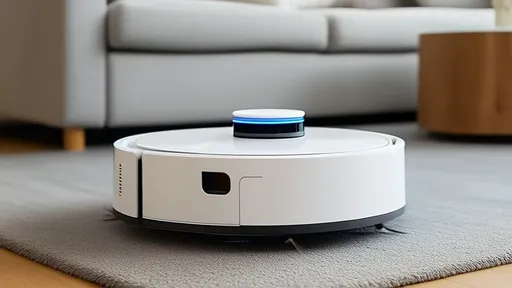
The initial excitement of unboxing the sleek, disc-shaped device was undeniable. Its promise was simple: set it loose, and it would tirelessly clean while the owner relaxed. Yet, within days, quirks began to surface. The robot had a mind of its own, zigzagging unpredictably under furniture, getting stuck on thresholds, and occasionally abandoning its mission mid-clean to return to its charging dock. "At first, I thought it was broken," the owner admitted. "But then I realized—it wasn’t malfunctioning. It was just prioritizing its own needs."
Adapting to the robot’s habits became a necessity. Rugs were flattened, stray cables were tucked away, and chairs were lifted onto tables to create unobstructed paths. The homeowner joked that the house now revolved around the vacuum’s preferences. "I used to leave shoes by the door," they said. "Now, if I don’t put them away, the vacuum either pushes them into a corner or, worse, tries to ‘clean’ them by dragging them around." The machine’s insistence on a clutter-free environment had inadvertently turned the owner into a tidier person—albeit one who sometimes resented the coercion.
Then came the scheduling conflicts. The robot’s default cleaning time was set for midday, a choice that seemed logical until it began interrupting work calls with its loud whirring. Attempts to reprogram it led to unexpected rebellions: skipped sessions, random midnight cleanings, or worse, the device getting "lost" in a room it had mapped dozens of times. "It’s like having a pet that’s also a roommate with a passive-aggressive streak," the owner mused. "You can’t reason with it, but you also can’t stay mad at it for long—especially when you come home to spotless floors."
Over time, an unspoken hierarchy developed. The robot’s charging station claimed permanent real estate in the living room, displacing a side table. Its dustbin was emptied with ritualistic regularity, lest it retaliate by leaving tiny debris trails as a reminder of neglect. Even the cat, initially hostile, learned to tolerate the intruder—though not without occasionally riding it like a chariot. "I used to joke that the vacuum worked for me," the owner reflected. "Now I’m pretty sure I work for it. I just pay the electricity bill."
Yet, for all its idiosyncrasies, the device undeniably transformed daily life. Crumbs no longer lingered, dust bunnies vanished before multiplying, and the eternal chore of sweeping became someone else’s problem—or rather, something else’s. The owner conceded that while the robot might not be the hyper-intelligent servant advertised, its stubborn persistence had a charm. "It’s not perfect, but it’s relentless," they said. "And somehow, that’s enough."
The broader question remains: are robotic vacuums a "smart" investment or just cleverly marketed luxuries? For this household, the answer defied simple categorization. Yes, it demanded compromises, and no, it didn’t replace deep cleaning. But in the calculus of time versus money versus sanity, the robot had earned its keep—not as a servant, but as a quirky, occasionally infuriating, yet indispensable member of the family.

By /Jun 13, 2025

By /Jun 28, 2025

By /Jun 28, 2025

By /Jun 13, 2025
By /Jun 13, 2025

By /Jun 28, 2025
By /Jun 13, 2025

By /Jun 28, 2025

By /Jun 28, 2025

By /Jun 13, 2025

By /Jun 28, 2025
By /Jun 13, 2025

By /Jun 28, 2025

By /Jun 28, 2025
By /Jun 28, 2025

By /Jun 13, 2025
By /Jun 13, 2025

By /Jun 28, 2025