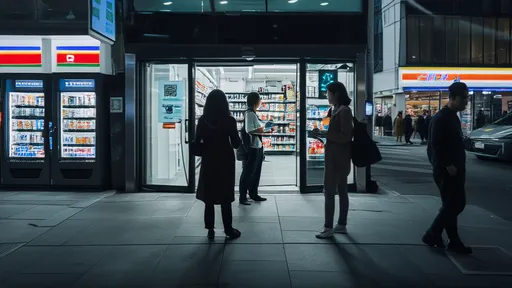
The once-buzzing concept of unmanned convenience stores, hailed as the future of retail, is facing a harsh reality check across China. Dubbed "unmanned supermarkets," these cashier-less stores were supposed to revolutionize shopping with their AI-powered cameras, facial recognition, and seamless mobile payment systems. Yet, in recent months, multiple outlets have shuttered their doors, leaving empty shelves and bewildered consumers questioning whether the technology was ever ready for prime time.
"It takes me five minutes just to scan the QR code and figure out how to open the door," complained Li Xiaoyuan, a 28-year-old office worker in Shanghai who tried one such store near her apartment. "By the time I grab a bottle of water, I could’ve walked to the family-run shop downstairs and back twice." Her sentiment echoes across social media, where complaints about malfunctioning sensors, confusing interfaces, and the sheer inconvenience of the stores have gone viral.
The unmanned store boom peaked around 2017-2018, when major players like BingoBox and Alibaba’s Tao Café expanded rapidly. Investors poured billions into the sector, betting that cutting labor costs and 24/7 availability would outweigh the hefty initial tech investments. However, the reality proved far messier. Without staff to restock shelves or troubleshoot technical glitches, stores often descended into chaos—expired products lingered, misplaced items confused inventory systems, and frustrated customers sometimes walked out without paying simply because the sensors failed to register their purchases.
Weathering the storm proved impossible for many. BingoBox, once operating over 500 outlets, quietly closed at least 60% of them by late 2023. Smaller chains collapsed entirely. Analysts point to a fatal miscalculation: while the model saved on salaries, it ignored China’s dense urban ecosystems where traditional mom-and-pop stores thrive precisely because of their human touch. "Auntie Zhang at the corner store remembers my usual brand of instant noodles and will lend me chopsticks if I forget mine," remarked Beijing resident Zhao Wei. "No algorithm can replicate that."
Technical limitations exacerbated the problem. Facial recognition often stumbled with masks or poor lighting, and mobile network delays—common in crowded areas—left shoppers trapped at exit gates waiting for payment confirmation. During peak hours, the supposedly frictionless experience became anything but. Worst of all, the stores failed their core promise: speed. Traditional checkout lines, when staffed adequately, still outpaced the technology.
The fallout has been brutal for some startups. Take Shenzhen-based EasyGo, which raised $30 million in 2018 promising "retail’s Jetsons future." Its stores now sit padlocked, with former employees describing chaotic last-ditch efforts to retrofit outdated equipment. Even tech giant Alibaba scaled back Tao Café, converting some locations into staffed convenience stores under its Freshippo brand. "We overestimated consumer appetite for tech when what they really wanted was reliability," admitted a former Tao Café project manager who spoke anonymously.
Yet not all players have retreated. JD.com’s unmanned stores, concentrated in corporate campuses and high-tech parks where tech literacy is higher, report steadier traffic. Some industry watchers believe the model might survive in niche environments—airport transit zones, university libraries—where odd-hour access justifies the trade-offs. But for mainstream adoption, the consensus is clear: until the technology becomes truly invisible rather than a cumbersome novelty, consumers will keep voting with their feet—straight back to the friendly neighborhood kiosk.
As the dust settles, the experiment offers a cautionary tale about innovation for its own sake. "Disrupting retail isn’t just about removing humans," reflected retail analyst Ming Liao. "It’s about understanding why people shop the way they do." For now, that understanding seems to reside not in gleaming automated storefronts, but in the cramped, chatty, wonderfully inefficient family-run stalls that have served Chinese communities for generations.
By /Jun 13, 2025

By /Jun 28, 2025
By /Jun 28, 2025
By /Jun 13, 2025

By /Jun 13, 2025

By /Jun 28, 2025

By /Jun 13, 2025

By /Jun 28, 2025

By /Jun 28, 2025

By /Jun 13, 2025

By /Jun 28, 2025
By /Jun 13, 2025

By /Jun 28, 2025

By /Jun 28, 2025

By /Jun 28, 2025

By /Jun 13, 2025
By /Jun 13, 2025

By /Jun 28, 2025