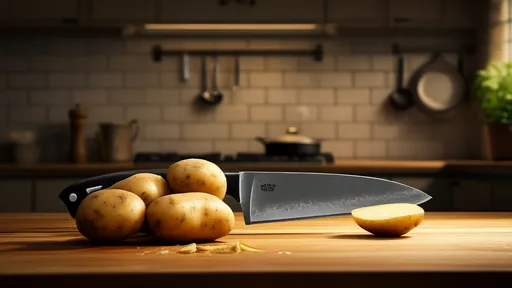
It happens to the best of us—you reach for your trusty kitchen knife, only to find it dull and speckled with rust. Before you consider tossing it or spending money on expensive sharpeners, there’s a surprising kitchen hack that might just save the day: a humble potato peel. Yes, the same thing you’d normally discard without a second thought could be the key to restoring your blade’s edge and shine.
Rust on knives isn’t just an eyesore; it can affect performance and even contaminate food. While commercial rust removers and sharpeners exist, many contain harsh chemicals or require technical know-how. The potato method, however, is as natural as it gets. The oxalic acid in potato skins reacts with iron oxide (rust), breaking it down gently without damaging the metal underneath. Meanwhile, the fibrous texture of the peel acts like a mild abrasive, helping to realign the blade’s edge.
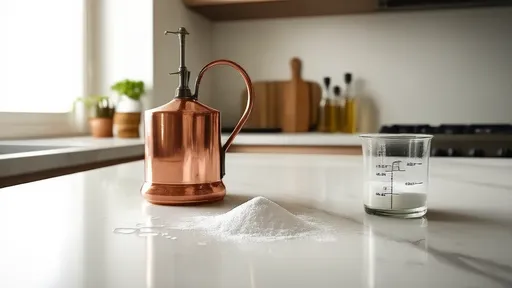
Here’s how it works: Cut a potato in half, leaving the skin intact. Stab the fleshy side with the tip of your knife to anchor it, then drag the blade backward along the peel at a 20-degree angle, as if sharpening on a stone. Repeat 5–6 times per side, then rinse. For stubborn rust, sprinkle baking soda on the peel for extra grit. The result? A noticeably sharper, cleaner blade—and zero waste.
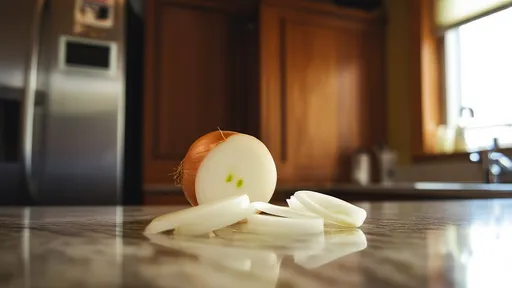
This trick isn’t just for emergencies. Professional chefs have long known that acidic vegetables (like potatoes or even onions) can maintain edges between proper sharpenings. One sushi chef in Kyoto swears by rubbing his usuba (Japanese vegetable knife) with daikon radish after each use to prevent oxidation. The principle is similar: natural acids combat corrosion while fine fibers hone the edge microscopically.
But why does this method outperform store-bought solutions sometimes? Precision plays a role. Most home sharpeners remove too much metal or create uneven bevels. Potato peels conform to the blade’s curve naturally, applying just enough pressure to polish rather than grind. It’s also forgiving—unlike whetstones, which demand perfect angles, this technique is nearly foolproof for beginners.
A word of caution: While effective for light rust and maintenance, severely corroded knives may need professional restoration. Also, always dry blades thoroughly after this (or any) treatment to prevent new rust. For bonus points, store knives with a silica gel packet to absorb moisture.
Beyond practicality, there’s something satisfying about solving a modern problem with an age-old ingredient. Before synthetic cleaners, people relied on nature’s chemistry—vinegar dissolved mineral deposits, ash scrubbed pots clean, and yes, potatoes kept tools sharp. In an era of disposable conveniences, this hack reminds us that brilliance often hides in plain sight. Or in this case, in the compost bin.

By /Jun 13, 2025
By /Jun 28, 2025

By /Jun 28, 2025

By /Jun 13, 2025

By /Jun 13, 2025

By /Jun 28, 2025

By /Jun 13, 2025
By /Jun 28, 2025
By /Jun 28, 2025

By /Jun 13, 2025

By /Jun 28, 2025

By /Jun 13, 2025

By /Jun 28, 2025

By /Jun 28, 2025

By /Jun 28, 2025

By /Jun 13, 2025

By /Jun 13, 2025
By /Jun 28, 2025