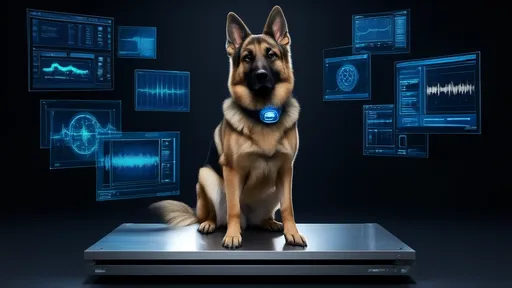
In a world where facial recognition and fingerprint scans have become commonplace, researchers are now exploring an unexpected frontier in biometric security: dog voiceprints. A groundbreaking pilot program in veterinary fintech is testing whether the unique vocal patterns of dogs can serve as a reliable authentication method for contactless payments at pet stores, grooming salons, and animal hospitals.
The concept isn't as far-fetched as it might initially sound. Dogs possess distinct vocal signatures much like humans have unique fingerprints. A team at the University of Helsinki's Animal Behavior Unit recently published findings demonstrating that machine learning algorithms can identify individual dogs by their bark with 92% accuracy across 50 breeds. This discovery has sparked interest from payment processors looking to create frictionless checkout experiences for pet owners.
How It Works
When registering for a canine voice payment system, owners record their dog barking in three different emotional states - excited, neutral, and distressed. Advanced audio processing isolates pitch, tone, and rhythm characteristics to create a voiceprint profile. At checkout, the dog simply barks into a specialized microphone, with the system comparing the live sample against the stored biometric template.
Early field tests at a Seattle pet store chain showed promising results. "We've reduced average transaction time by 40% compared to chip-and-PIN cards," reported store manager Lisa Tran. "Dogs seem to understand they're participating - we've even had some spontaneously bark at the terminal when their owners approach the register."
Security Considerations
Biometric security experts have raised important questions about potential vulnerabilities. Could a recording of the dog's bark defeat the system? Would identical twin dogs share similar enough vocal patterns to create false positives? The development team claims to have addressed these concerns through liveness detection that analyzes subtle breath patterns and ambient noise artifacts that can't be replicated in recordings.
Perhaps more concerning is the emotional component. "A stressed or frightened dog may produce vocalizations too different from their baseline," cautions Dr. Aaron Feldstein of the Animal Cognition Institute. "We're working on adaptive algorithms that can account for mood variations while maintaining security standards."
Consumer Adoption Challenges
Despite the technological promise, significant behavioral hurdles remain. Market research indicates 68% of dog owners feel uncomfortable with the idea of their pet authorizing payments, even for small amounts. There's also the practical matter of dogs that simply won't bark on command. "My bulldog only makes noise when the doorbell rings," complains Portland resident Mark Henderson. "Am I supposed to ring my own doorbell at checkout?"
Payment processors are experimenting with various incentive models to drive adoption. Some pilot locations offer free treats for participating dogs, while others provide discounts proportional to transaction speed. The most successful test site in Austin, Texas reported a 22% increase in average customer spend after implementation, suggesting the novelty factor may overcome initial reluctance.
Regulatory and Privacy Implications
As with any biometric system, data protection concerns loom large. The European Data Protection Board has already issued preliminary guidance classifying canine voiceprints as "special category data" under GDPR when linked to payment information. Several U.S. states are considering legislation that would require explicit consent from both owner and dog, however the legal definition of canine consent remains murky.
Veterinary ethicists have entered the debate as well. "We must consider whether we're commodifying animal behavior in ways that could impact the human-pet relationship," argues Dr. Susan Choi of the Boston Animal Ethics Center. Her research team is developing assessment protocols to ensure enrolled dogs show no signs of stress related to the payment process.
The Road Ahead
Industry analysts predict the global market for pet-related payment technologies could reach $800 million by 2026. Major players like Petco and Chewy are closely monitoring the voiceprint trials, while startups like BarkPay and WoofWallet are racing to patent proprietary algorithms. The next development phase will focus on multi-factor authentication combining vocal patterns with other canine biometrics like nose prints or heartbeat signatures.
As strange as dog-based payments may seem today, they represent just one facet of the expanding biometric frontier. In an increasingly cashless society, our pets might soon become more than companions - they could be the key to our wallets. Whether this technology will achieve mainstream adoption or remain a curious footnote in fintech history may depend less on the algorithms than on whether Fido feels like barking at the checkout counter.

By /Jul 15, 2025

By /Jul 15, 2025

By /Jul 15, 2025
By /Jul 15, 2025

By /Jul 15, 2025

By /Jul 15, 2025
By /Jul 15, 2025

By /Jul 15, 2025

By /Jul 15, 2025
By /Jul 15, 2025

By /Jul 15, 2025

By /Jul 15, 2025

By /Jul 15, 2025

By /Jul 15, 2025

By /Jul 15, 2025

By /Jul 15, 2025

By /Jul 15, 2025

By /Jul 15, 2025